Welcome to Annalong
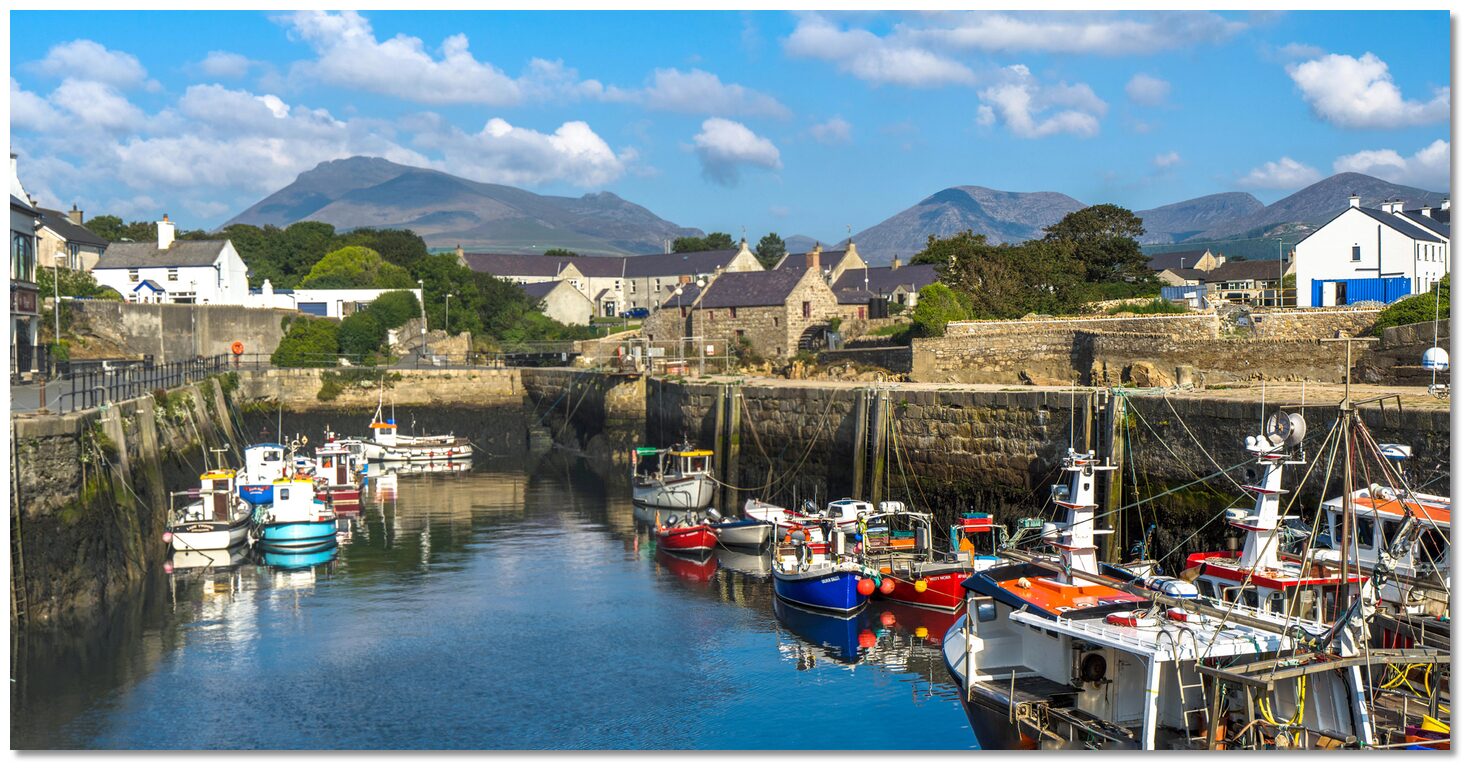
Nestled at the foot of the majestic Mourne Mountains, approximately eight miles south of Newcastle, lies the charming village of Annalong. The village's name derives from the Irish "Ath na Long", meaning "Ford of the Ships" - a fitting title for this picturesque coastal settlement with a rich maritime heritage spanning centuries.
This is a place where history lives in every corner, where the granite cliffs tell stories of industrial achievement, and where the working harbour remains the heartbeat of the community. Whether you're a history enthusiast, a nature lover, or simply seeking authentic local experiences, Annalong offers a genuine glimpse into coastal Irish life.
Annalong Harbour - A Maritime Heart
Dating back to the early 1800s, Annalong Harbour stands as one of Northern Ireland's most historically significant coastal features. Originally a modest working port, the harbour was significantly enlarged and improved during the 1880s, transforming it into a modern facility that would serve the region's growing maritime industry.
The Granite Quarrying Era
The nineteenth and early twentieth centuries witnessed Annalong's transformation into a thriving international port. The discovery and extraction of the famous Mourne granite created unprecedented economic opportunities. This durable, distinctive stone - renowned for its superior quality - was quarried from the surrounding mountains and exported globally. Ships laden with Mourne granite departed from Annalong's quays bound for Dublin, Liverpool, and ports far beyond, carrying with them the reputation of local craftsmanship and geological excellence.
A remarkable feat of Victorian engineering supported this trade: a purpose-built railway spanning 4.5 miles was constructed between Silent Valley and the harbour specifically to transport materials for the reservoir construction. This railway became a vital artery connecting the mountains to the sea, enabling the efficient movement of goods and furthering the village's importance as a commercial hub.
A Somber Chapter in History
Not all stories from Annalong's maritime past are tales of prosperity. On 13 January 1843, a severe and devastating gale swept across the Irish Sea. The storm caught local fishing boats unaware, resulting in a tragedy that would be etched into the village's collective memory. Fourteen boats were lost, and tragically, 76 men perished in the tempest. This catastrophe stands as a sobering reminder of the dangers that accompanied life at sea and the sacrifices made by those who depended on the ocean for their livelihood.
From Granite to Fishing
As the twentieth century progressed and industrial patterns shifted, the harbour's primary function gradually transitioned from granite export to fishing. This evolution saw Annalong transform into an authentic working fishing village, maintaining its maritime character while adapting to changing economic realities. Today, the harbour remains a working port, serving the local fishing community and preserving centuries-old traditions.
Modern Annalong Harbour
Contemporary improvements have enhanced the harbour's functionality while respecting its historic character. The harbour bed has been deepened to accommodate modern vessels, and a pontoon has been added to improve facilities for both commercial and leisure uses. The most significant development is the creation of the Marine Park, a beautifully landscaped area that celebrates the harbour's heritage whilst providing recreational space for visitors and locals alike.
The Marine Park features an excellent trail offering spectacular views of the working harbour, the sea, and the surrounding landscape. Interpretive exhibitions tell the stories of those who have worked and lived here, bringing the harbour's rich past to life for contemporary visitors. Adjacent to the harbour, the renowned Mourne Coastal Path provides walkers with unforgettable opportunities to observe diverse sea and bird life whilst enjoying some of Northern Ireland's most dramatic coastal scenery.
Annalong Corn Mill - A Living Monument
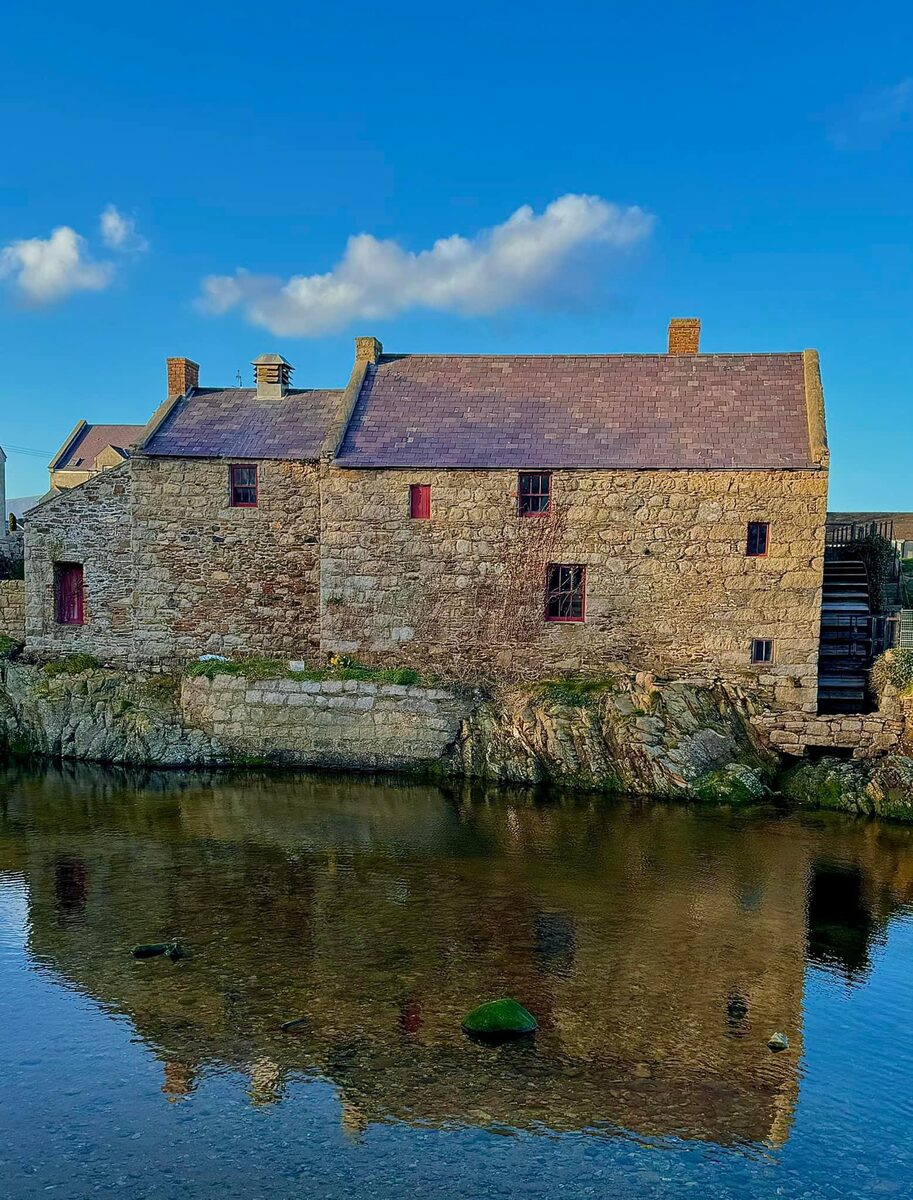
Standing majestically within the Marine Park is Annalong Corn Mill, a beautifully restored watermill that serves as both a working monument to agricultural heritage and a fascinating window into rural life during the nineteenth and twentieth centuries.
A Legacy of Milling
Built in the early 1800s, the corn mill replaced an earlier milling facility located upstream. For generations, the mill served local farming communities, transforming raw oats into nutritious oatmeal that sustained families throughout the region. The mill's water-powered machinery represented the cutting edge of agricultural technology for its era, harnessing the power of the nearby stream to grind grain with remarkable efficiency.
Evolution and Innovation
Like many traditional industries, the mill evolved with technological advancement. During the 1890s, a steam engine was installed, supplementing and eventually supplementing the traditional waterpower. Around the 1930s, a Marshall hot-bulb engine was added, further modernizing operations. These innovations allowed the mill to maintain productivity and competitiveness even as industrial milling gradually displaced traditional methods.
The mill finally ceased operation in the mid-1960s, marking the end of an era. Despite this closure, Annalong Corn Mill retained the distinction of being one of the last working watermills in Northern Ireland - a testament to its significance in the region's agricultural heritage.
Restoration and Preservation
Recognizing the mill's historical importance, restoration efforts began in 1983, and the facility was ceremonially reopened to the public in 1985. A more comprehensive restoration was undertaken in 2014, ensuring the mill's preservation for future generations and returning it to the high standard of presentation it maintains today. The centerpiece of the mill is its magnificent 15-foot waterwheel, a marvel of nineteenth-century engineering that continues to captivate visitors.
Three Stories in One
The mill brilliantly weaves together three interconnected narratives: the traditional milling process that sustained local communities, the harbour's pivotal role in granite quarrying and coal importation that fueled regional commerce, and the skilled craftsmanship of the stonemasons who shaped Mourne granite into architectural masterpieces.
Seasonal Opening Hours
Annalong Corn Mill is open seasonally from April through September, allowing visitors to explore its mechanisms and exhibitions during the warmer months. Located in the Marine Park at Annalong, BT34 4QG, the mill offers guided experiences that bring history to life through expert interpretation and demonstration.
Activities & Things to Do in Annalong
Annalong is far more than a museum of history - it's an active, vibrant community offering numerous opportunities for outdoor adventures and cultural experiences. The village caters to diverse interests and activity levels, ensuring memorable experiences for all visitors.
Walking & Hiking
The Mourne Coastal Path provides stunning seaside walks with dramatic views of cliffs, coves, and marine wildlife. The Marine Park trail offers gentler walking opportunities with excellent harbour vistas. More adventurous hikers can tackle the renowned Mourne Mountain paths directly from the village.
Cycling
The quiet roads surrounding Annalong and gentle coastal routes make the area ideal for cycling enthusiasts. The Mourne area offers excellent cycling opportunities suitable for various skill levels, combining coastal and mountain scenery.
Water Sports & Fishing
The harbour and surrounding waters attract sailing and diving enthusiasts. The area is renowned for excellent sea fishing opportunities, whether you prefer harbour-based fishing, boat trips, or shore fishing at nearby locations.
Equestrian Activities
For those who prefer to explore on horseback, the peaceful countryside surrounding Annalong offers wonderful riding opportunities. The roads and trails wind through some of Northern Ireland's most beautiful scenery.
A Welcoming Community
What truly distinguishes Annalong is the warmth and authenticity of its community. This is a genuine working village, not a tourist attraction designed from scratch. You'll encounter local fishermen tending their boats, families enjoying the harbour, and residents who are genuinely pleased to share their home. It offers visitors a quiet retreat from modern hustle whilst maintaining authentic coastal village character. There's something genuinely restorative about spending time in a place where life continues much as it has for generations, where maritime traditions remain vital, and where the landscape's raw beauty commands respect and admiration.
Explore More Local Guides
Discover more about the beautiful region surrounding Marine Villa